Corridors Maintained for Utility Access
Commercial & Right-of-Way Clearing in Rodessa for utility corridors and commercial properties requiring recurring maintenance cycles
Utility right-of-ways and commercial corridors in northwest Louisiana require regular clearing to prevent overgrowth that obstructs equipment access, creates fire hazards, and interferes with utility line maintenance. Dense growth clearing in humid subtropical climates is a recurring need because vegetation regrows quickly along parish corridors, and delayed maintenance creates safety hazards that delay emergency repairs. Stolzle Services LLC handles equipment-based clearing for utility companies, municipalities, and commercial operators, using techniques that preserve utility lines and maintain access routes without damaging infrastructure or creating soil erosion problems.
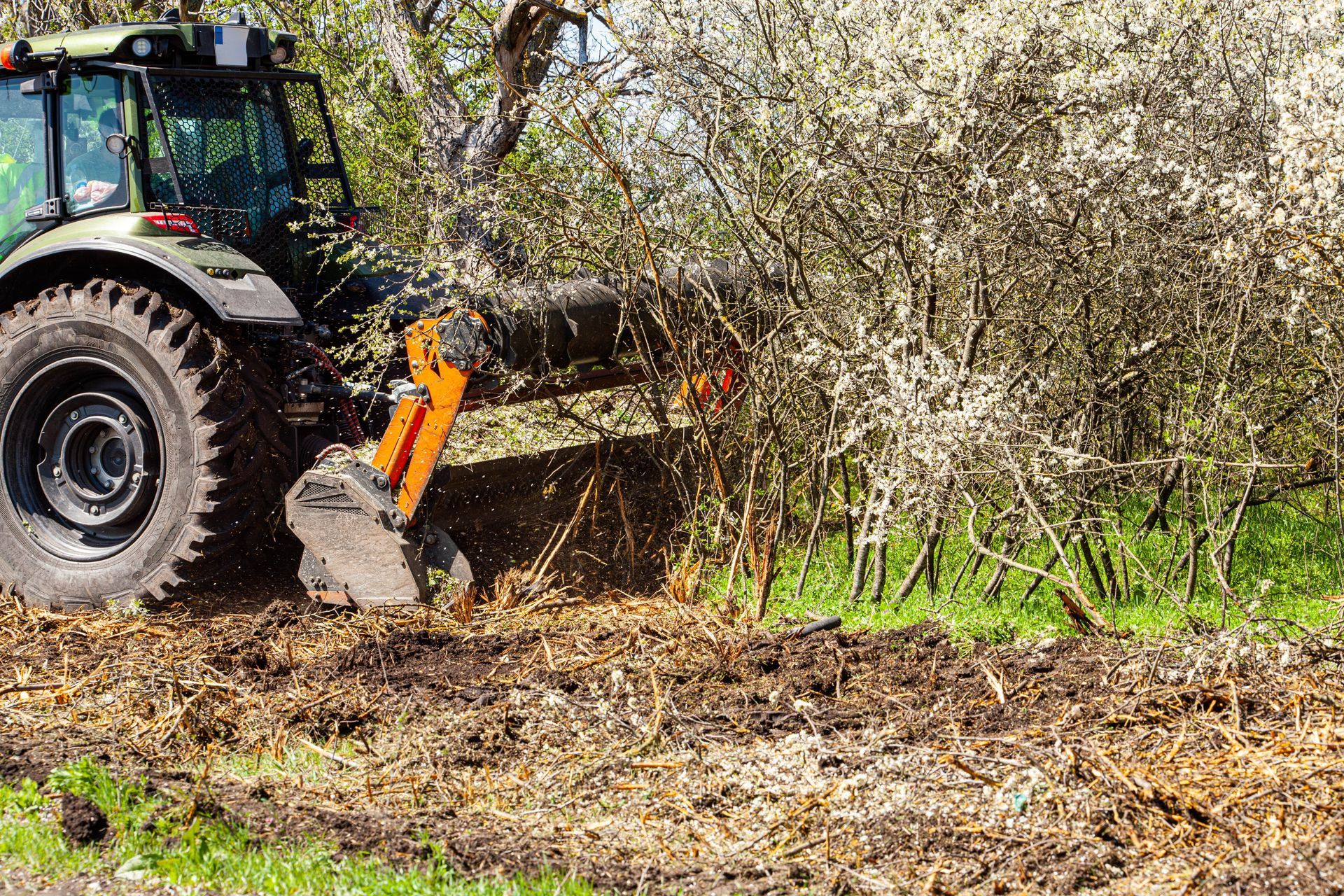
The clearing process removes dense brush along corridors, hauls debris off-site, and uses selective clearing methods that leave utility poles, markers, and access points intact. Wet-season access requires tracked equipment that avoids rutting soft ground near drainage pathways, and operators understand utility right-of-way permit requirements that govern vegetation removal near power lines, gas pipelines, and communication cables. Commercial properties in the Cane River area benefit from scheduled clearing that maintains site appearance and prevents vegetation from blocking signage, parking areas, or building access routes.
Schedule a corridor evaluation to identify vegetation density and discuss maintenance cycle timing based on seasonal growth patterns.
What Corridor Clearing Actually Accomplishes
Equipment-based clearing removes brush, saplings, and woody vegetation from utility corridors without disturbing underground infrastructure or damaging above-ground utility lines. Debris hauling clears cut material from the corridor rather than leaving piles that block access or create fire hazards during dry periods. Selective clearing preserves mature trees outside the utility zone while removing growth that interferes with line maintenance or creates wind-throw hazards during storms common in Natchitoches Parish and Sabine Parish.
Once clearing finishes, utility crews access lines and equipment without cutting additional vegetation, and maintenance vehicles travel corridors without obstruction. Fire risk decreases because dry vegetation no longer accumulates near power lines or transformers, and drainage pathways reopen where vegetation previously blocked water movement. Commercial properties maintain curb appeal and code compliance, and utility companies reduce emergency response times because access routes remain passable year-round.
Recurring maintenance cycles prevent overgrowth from reaching heights that require heavy equipment and extended clearing timelines. Right-of-way work often follows seasonal schedules that align with utility company inspection cycles or municipal permit requirements, and commercial properties typically schedule clearing during off-peak business periods to minimize disruption. The service does not include tree removal outside the utility zone, stump grinding, or final grading beyond access route maintenance.
What Property Owners Usually Ask
Utility companies and commercial operators in the Ark-La-Tex region typically ask about permit compliance, corridor access, and maintenance scheduling.
What permits are required for right-of-way clearing in northwest Louisiana?
Utility corridors governed by easement agreements require notification to property owners and compliance with utility company vegetation management guidelines. Municipal right-of-ways may require permits from parish authorities, and operators verify permit requirements before beginning work to avoid project delays or compliance issues.
How does selective clearing protect utility infrastructure?
Equipment operators identify utility markers, poles, and underground cable routes before clearing begins, and blade depth is adjusted to avoid damaging buried lines. Vegetation within ten feet of power lines is removed manually rather than with heavy equipment to prevent accidental contact that creates safety hazards or service interruptions.
Why do right-of-ways in Rodessa require recurring maintenance?
Humid subtropical conditions create continuous vegetation growth from early spring through late fall, and corridors develop thick brush within six months if left unmaintained. Recurring cycles prevent growth from reaching heights that obstruct utility access or create fire risks near electrical infrastructure.
What happens during wet season corridor clearing?
Tracked equipment accesses saturated corridors without creating deep ruts that damage drainage pathways or access routes. Operators delay work in extremely soft conditions to preserve ground stability, and debris hauling happens in stages if moisture levels prevent heavy truck access during initial clearing phases.
When should commercial properties schedule clearing to minimize business disruption?
Early morning or off-peak seasonal work reduces customer and employee impact. Properties with seasonal traffic patterns benefit from clearing during slow periods, and utility corridor work often aligns with scheduled maintenance windows to avoid conflicts with emergency response needs.
Stolzle Services LLC provides commercial and right-of-way clearing for utility companies, municipalities, and commercial operators across northwest Louisiana, with equipment and expertise suited to corridor maintenance in humid subtropical conditions. Call (318) 658-0643 to discuss vegetation management requirements and establish a maintenance schedule for your corridors or commercial property.