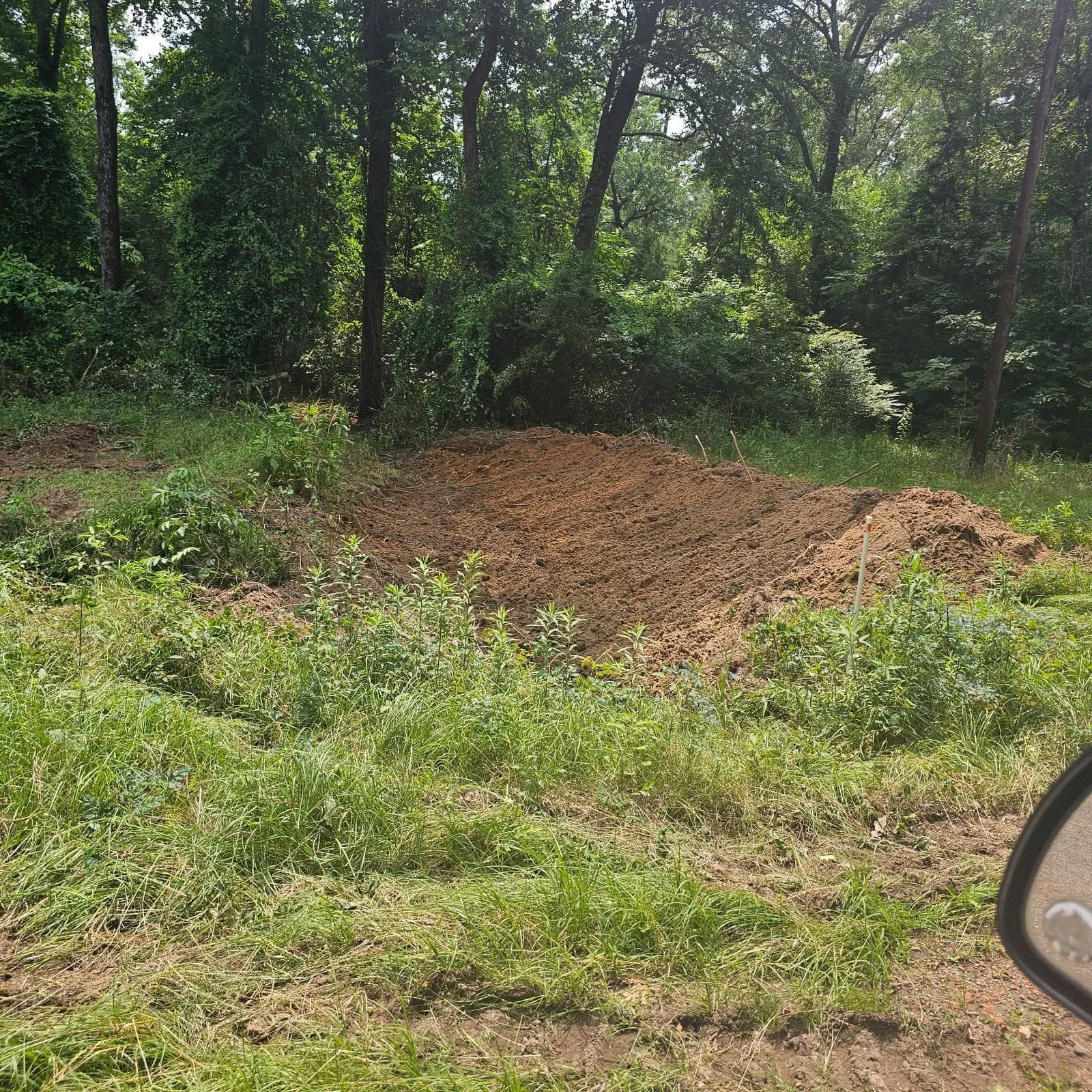
Overgrown Sites Cut Back to Manageable Condition
Bush Hogging & Rough Mowing in Rodessa for properties with seasonal overgrowth and right-of-way corridors
Dense seasonal growth accumulates quickly on properties in northwest Louisiana, where high moisture and long growing seasons create thick understory vegetation that obstructs access and drainage. Stolzle Services LLC uses commercial-grade rotary mowers to cut bulk vegetation on overgrown lots, right-of-way corridors, and properties requiring regular maintenance cycles. The equipment handles wet season conditions and thick brush that standard mowing attachments cannot process, and the service includes debris management to clear cut material from the site.
Bush hogging cuts vegetation at ground level using rotary blades designed for saplings, thick grasses, and woody brush. The process addresses properties where growth has exceeded the capacity of residential mowing equipment, and the mower handles terrain variations without scalping or gouging clay loam soils. Right-of-way corridors require repeated mowing cycles to prevent overgrowth that obstructs utility access or creates drainage blockages along parish boundaries.
Arrange an on-site consultation to review property size and vegetation density before scheduling mowing cycles.
Why Dense Growth Returns Without Regular Mowing
Humid subtropical conditions in Natchitoches Parish and Sabine Parish create continuous vegetation growth from early spring through late fall. Without regular mowing, properties develop thick understory that blocks equipment access, traps standing water, and creates fire hazards during dry periods. Commercial rotary mowers cut through established growth in a single pass, reducing vegetation height from several feet to ground level and allowing property owners to regain site access.
After mowing, the property surface becomes accessible to vehicles and equipment, and drainage pathways reopen where vegetation previously blocked water movement. Cut material breaks down over several weeks, or it can be raked and hauled if immediate clearance is required. Properties maintain usability longer when mowing happens on a scheduled cycle rather than waiting until growth becomes impassable, which reduces the time and equipment effort required for each service visit.
Wet season mowing requires careful timing to avoid soil rutting in saturated areas. Operators adjust mowing paths based on ground moisture levels and skip passes over soft zones until soil firms up, which preserves the property surface for future mowing cycles. The service does not include grading, stump removal, or debris hauling beyond standard cut material management.
Answers to Frequent Service Questions
Property owners in the Ark-La-Tex region typically ask about mowing frequency, equipment capabilities, and seasonal timing.
How often should properties be mowed to prevent overgrowth?
Most properties in Rodessa require mowing every six to eight weeks during the growing season to keep vegetation below two feet. Right-of-way corridors and commercial sites benefit from quarterly mowing to maintain utility access and prevent drainage issues caused by dense undergrowth.
What vegetation types can bush hogging handle?
Commercial rotary mowers cut through thick grasses, saplings up to two inches in diameter, woody brush, and established weeds. The equipment does not remove stumps or handle large trees, which require separate clearing services.
Why does clay loam soil affect mowing equipment access?
Clay loam soils common in northwest Louisiana become slippery and rutted when saturated, so wet season mowing requires tracked equipment or delayed scheduling until ground conditions firm up. Operators avoid repeated passes over soft areas to prevent soil compaction that creates drainage problems after vegetation dries.
What happens to cut vegetation after mowing?
Cut material is left on-site to decompose unless you request raking and hauling. Decomposition takes two to four weeks depending on moisture levels, and the organic matter returns nutrients to the soil as it breaks down.
When is the best time to schedule the first mowing of the season?
Early spring mowing prevents vegetation from reaching heights that require multiple passes. Scheduling the first cut before growth exceeds eighteen inches reduces equipment wear and shortens service time, which lowers overall maintenance costs for the growing season.
Stolzle Services LLC provides bush hogging and rough mowing for residential properties, right-of-way corridors, and commercial sites across northwest Louisiana. Contact the crew to establish a mowing schedule based on your property's growth patterns and access requirements.